
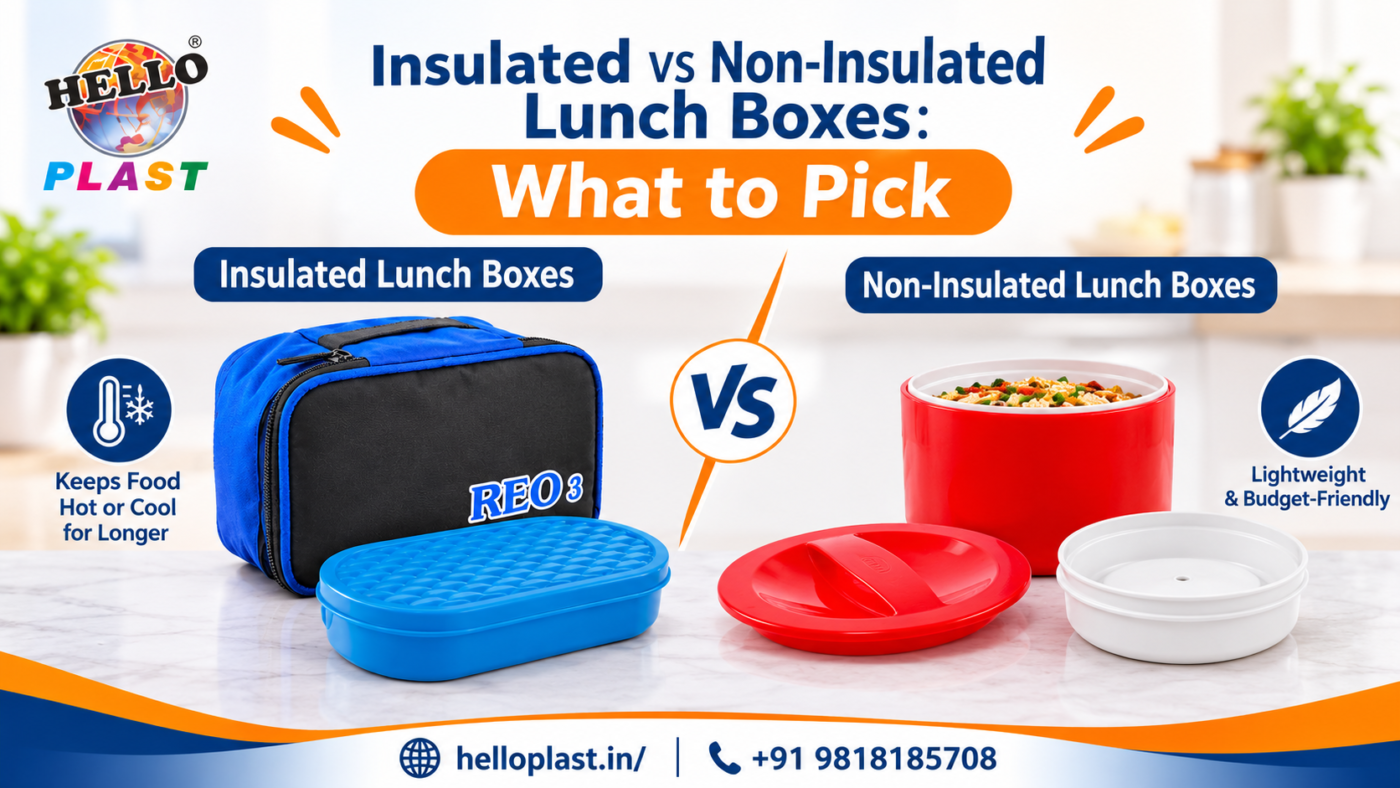
Choosing the right lunch box is an important part of carrying homemade meals to work, school, college, or while travelling. With different designs and materials available, people often compare insulated and non-insulated lunch boxes before making a purchase. Both options serve the purpose of storing and carrying food, but they differ in temperature retention, construction, convenience, and everyday use. If you are exploring quality kitchen utility products, understanding these differences can help you select a lunch box that matches your daily requirements.
What Is an Insulated Lunch Box?
An insulated lunch box is designed to slow down heat transfer and help maintain the temperature of food for a longer period compared with a standard non-insulated container.
These lunch boxes generally feature an insulated construction that reduces the impact of outside temperatures. Depending on the design and materials, they can help keep meals warm or cold for longer.
Insulated lunch boxes are particularly useful for office employees, students, professionals, and people who travel regularly. They are also a practical option for individuals who prepare meals at home and prefer carrying them throughout the day.
What Is a Non-Insulated Lunch Box?
A non-insulated lunch box is a regular food storage container without a dedicated thermal insulation layer. It is primarily designed to store, organise, and carry meals conveniently.
These lunch boxes are available in different shapes, sizes, colours, and compartment arrangements. They are generally lightweight and straightforward to use, making them suitable for everyday meal storage.
For people who eat shortly after packing their food or have access to a refrigerator or microwave, a non-insulated lunch box can be a convenient choice.
Insulated vs Non-Insulated Lunch Boxes: Key Differences
Understanding the main differences can make the selection process easier. The following comparison highlights the features that matter most when choosing between these two options.
| Features | Insulated Lunch Box | Non-Insulated Lunch Box |
|---|---|---|
| Temperature Retention | Helps maintain food temperature for longer | Does not provide dedicated temperature retention |
| Construction | Includes thermal insulation | Standard container construction |
| Weight | May be slightly heavier | Generally lightweight |
| Daily Usage | Suitable for longer commutes and extended meal gaps | Suitable for regular short-duration use |
| Design | Available in different insulated designs | Available in simple and compact designs |
| Food Storage | Helps slow temperature changes | Mainly provides basic food storage |
| Convenience | Useful when reheating facilities are unavailable | Convenient when meals are consumed relatively soon |
| Price | May cost more depending on construction | Often available at more affordable prices |
Benefits of Choosing an Insulated Lunch Box
An insulated lunch box can be a useful investment for people with busy daily schedules. Its temperature-retaining construction helps reduce the rate at which food changes temperature, making it suitable for longer commutes and extended working hours.
Better Temperature Retention
The biggest advantage is its ability to slow down temperature changes. This can be particularly helpful for employees who pack their meals in the morning and eat later in the afternoon.
Suitable for Office and Travel
People who travel frequently or work away from home can benefit from insulated lunch boxes. They provide a convenient way to carry meals without depending entirely on immediate access to heating facilities.
Practical for Everyday Meals
Whether carrying rice, chapati, vegetables, or other homemade food, an insulated lunch box can support everyday meal routines. However, actual performance depends on its insulation quality, construction, food temperature, and surrounding conditions.
Which Lunch Box Is Better for Office Employees?
For office employees, the right choice depends on commuting time, working hours, and lunch schedules.
Employees who leave home early and have lunch several hours later may prefer an insulated lunch box because it helps slow temperature changes. Those who work nearby or have access to refrigerators and microwaves may find a non-insulated option more practical.Businesses planning employee welcome kits, festive hampers, or appreciation gifts can also consider insulated lunch boxes. Exploring practical lunch box options can help organisations identify different designs suitable for corporate gifting requirements.
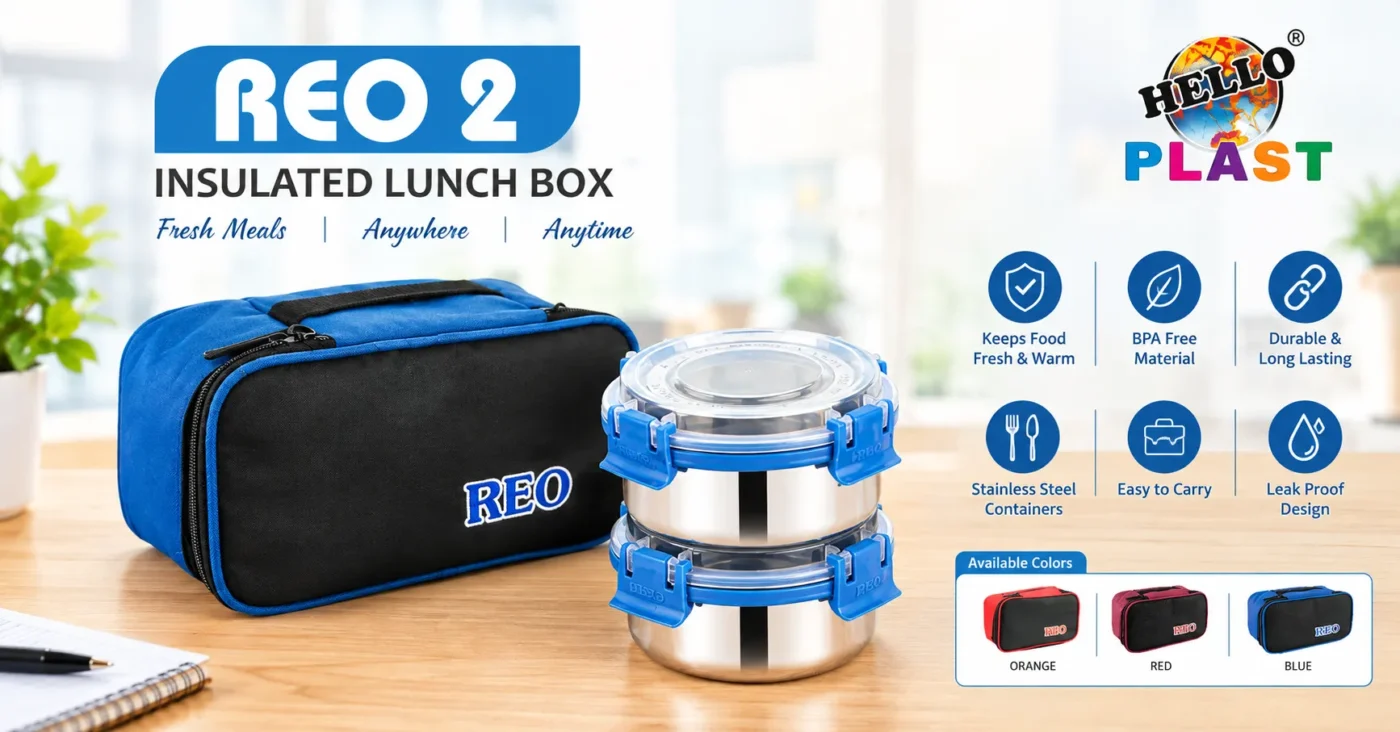
Important Factors to Consider Before Buying a Lunch Box
Apart from insulation, there are several features worth checking before selecting a lunch box.
Material Quality: Always choose food-contact materials suitable for their intended use. Check the product specifications and material details before purchasing.
Capacity and Compartments: Select a size that comfortably accommodates your regular meals. Multiple compartments can help organise different food items.
Leak Resistance: A properly fitting lid and secure locking mechanism can help prevent accidental spills during transportation.
Cleaning and Maintenance: Choose a design that is easy to wash, clean, and dry. Regular cleaning is important for maintaining food hygiene.
Portability: Consider the weight, dimensions, handle design, and overall convenience of carrying the lunch box.
Temperature Requirements: If maintaining food temperature is important, check the manufacturer’s insulation and performance specifications rather than relying only on the product label.
It is also important to remember that insulation does not automatically make a lunch box a substitute for refrigeration. Perishable food should be kept at safe temperatures using appropriate refrigeration or cold packs.
Lunch Boxes as Practical Corporate Gifts
Lunch boxes have become a useful option for corporate gifting because they combine everyday functionality with brand visibility. Companies can distribute them during employee onboarding programmes, annual celebrations, promotional campaigns, festive events, and customer appreciation activities.
Businesses looking for everyday corporate gifting solutions can explore different kitchen utility products according to their budgets, audience, and bulk order requirements.
For more information, visit: www.helloplast.in
Final Thought
Both insulated and non-insulated lunch boxes have their own advantages. While insulated options are useful for people who need better temperature retention during long working hours and commutes, non-insulated lunch boxes are suitable for simple food storage and shorter meal schedules.The best choice ultimately depends on your lifestyle, food habits, travel requirements, and budget. Before purchasing, consider material quality, capacity, ease of cleaning, and the intended use of the product.
